The Enduring Appeal of Solid Wood Furniture
When you walk into a room furnished with genuine solid wood, the atmosphere shifts immediately. There is a weight and a warmth to it that manufactured particleboard simply cannot replicate, no matter how convincing the laminate might look on a showroom floor. Real wood breathes, responds to the light, and carries the subtle history of growth rings formed over decades in the forest.
At Dorbrol, we believe that the furniture you place in your home should outlast trends, moving boxes, and changing interior design fads. We build pieces meant to be lived with, touched daily, and eventually handed down to the next generation.
The Anatomy of True Craftsmanship
Building furniture that survives generations starts long before the first cut is made on the bandsaw. It begins with selecting lumber that has been dried slowly to prevent warping, cracking, or twisting as it adjusts to the dry heat of Canadian winters. Rushed drying ruins good timber, leaving hidden stresses inside the board that will eventually fail under normal household use.
Once the lumber reaches our workshop, every board is inspected for natural character and structural flaws. Knots are stabilized, grain patterns are matched across table tops, and pieces are cut with precision allowances for wood movement. Because wood expands and contracts with humidity, rigid construction methods lead to split panels. Traditional joinery accommodates these shifts naturally, keeping the structure sound for decades.
Why Fast Furniture Fails
Modern retail stores are filled with heavy-looking dressers and desks made from thin veneers glued over wood dust and synthetic resins. These materials look acceptable on day one, but they carry fundamental weaknesses that reveal themselves very quickly.
- Edges chip easily and expose the crumbly core underneath.
- Cam-lock fasteners loosen over time, causing wobbling frames.
- Water rings permanently swell and ruin engineered wood surfaces.
- Scratches pierce the thin veneer, making repairs nearly impossible.
- Hardware pulls out of soft particleboard with normal daily tugs.
- Disassembly for moving often destroys the structural integrity entirely.
None of these failures happen with honest hardwood construction. A scratch on a solid oak table top can be sanded out and re-oiled in an afternoon. A loose joint can be re-glued and clamped back to its original strength. Solid wood accepts repair because the material is identical all the way through.
Finishes That Protect Without Hiding
The final stage of creating a great piece of furniture is the finish. Many commercial manufacturers seal wood under thick layers of plasticized lacquer that feel cold and sterile to the touch. This approach locks the wood away from the room, turning a natural organic material into something that feels like synthetic resin.
We prefer natural hard-wax oils and penetrating finishes that soak directly into the pores of the wood. These finishes protect the surface against spilled coffee, wine, and daily wear while leaving the open grain tactile and visible. When you run your hand across a Dorbrol table, you feel the texture of the tree, not a thick chemical shell.
Living With Natural Materials
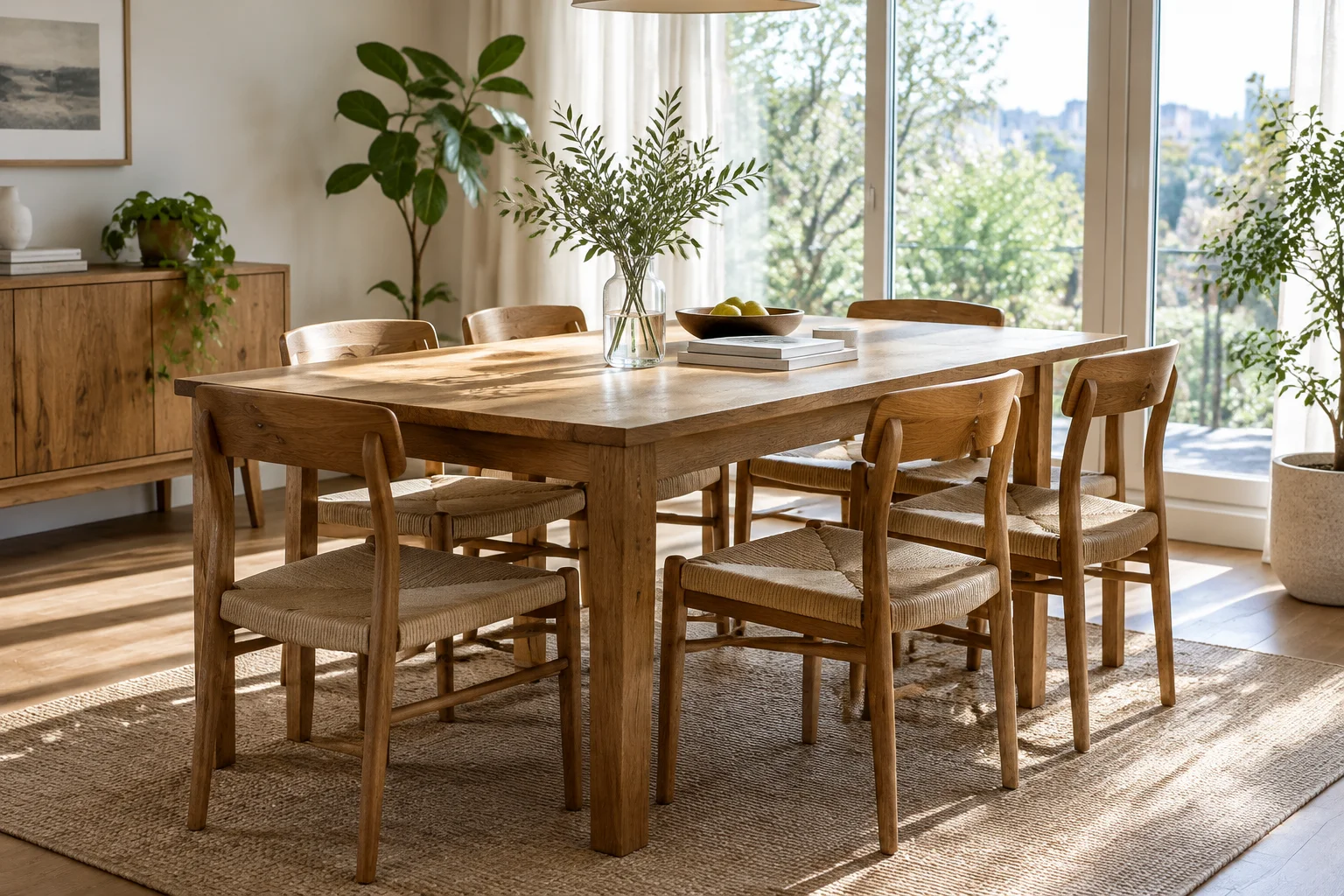
Adopting solid wood into your daily life requires a slight shift in expectations. Unlike plastic or laminate, wood ages gracefully, picking up minor dents, patinas, and character marks that tell the story of your household. A dining table where children do homework, families host holiday dinners, and friends gather late into the night should show signs of that vibrant life.
Treat your wooden furniture with basic respect, clean up standing moisture promptly, and feed the surface with natural oils every year or two. In return, it will provide a reliable, beautiful foundation for your daily routines, grounding your living spaces in natural authenticity.